

Deal Called More Media Suppression From Trump
Can Gayle King Be Both Celebrity and Journalist?
Davidson Leaves WaPo Column Over Policy Change
When Will NABJ Respond to the Urban League?
Spanish-Language Journalist Granted Bond
. . . Harassment Sending Salvadoran Journos into Exile
Israeli, Iranian Attacks Also Hurt Journalists
The Man Who Discovered the Watergate Break-In
Short Takes: Sean Combs; Laura Barrón-López; Farah Stockman; Nestor Ramos; TheRoot.com; Byron Allen; National Newspaper Publishers Association; NNPA and Cuba; harassment, detention of independent Cuban journalists; Marcus Mabry; Sudeep Reddy; Mumia Abu-Jamal; Kimi Yoshino; Zuri Berry; Isabel Lara; Felix Contreras; Chris Pena; Wesley Morris; arrested Zimbabwe editor.
Homepage photo: Bill Whitaker interviews Kamala Harris for “60 Minutes.” (Credit: CBS)
[btnsx id=”5768″]
Donations are tax-deductible.
“We are posting the same transcripts and videos of our interview with Vice President Kamala Harris that we provided to the FCC,” CBS News said in February. “They show – consistent with 60 Minutes’ repeated assurances to the public – that the 60 Minutes broadcast was not doctored or deceitful.” (Credit: CBS/YouTube).
Deal Called More Media Suppression From Trump
Spurning pleas from the staff of “60 Minutes,” from First Amendment advocates and from those who fear that the nation is moving further toward Donald Trump-led authoritarianism, Paramount said late Tuesday that it has agreed to pay Trump $16 million to settle his lawsuit over the editing of an interview on CBS News’ “60 Minutes.”
It was “an extraordinary concession to a sitting president by a major media organization,” in the words of Benjamin Mullin, Michael M. Grynbaum, Lauren Hirsch and David Enrich, writing Wednesday for The New York Times.
They added, “The deal is the clearest sign yet that Mr. Trump’s ability to intimidate major American institutions extends to the media industry.”
Paramount Global, CBS’ parent company, said the money will go to Trump’s future presidential library and that the settlement did not involve an apology.
While race was not a major factor in the dispute, both the interviewer, Bill Whitaker, and the interviewee, then-Vice President Kamala Harris, are Black. On the other side, George Cheeks, part of a three-person “Office of the CEO” at Paramount Global, has been described as biracial.
On Sunday, Oliver Darcy reported for his Status newsletter that “people familiar with the matter” told him that Whitaker and his six “60 Minutes” colleagues –– Lesley Stahl, Scott Pelley, Anderson Cooper, Sharyn Alfonsi, Jon Wertheim and Cecilia Vega — “took a hard stance on Trump’s lawsuit.
“They pointedly expressed concern that Paramount is failing to put up a fierce and unrelenting fight in the face of Trump’s lawsuit over the program’s Kamala Harris interview, which has been widely denounced by the legal community as baseless, according to the people familiar with the matter. They said Trump’s allegations against the storied program are false and ripped his lawsuit as baseless. And they warned in no uncertain terms that if Paramount were to settle with Trump, it will stain the reputation of the company and undermine the First Amendment.”

The “60 Minutes” journalists had “warned in no uncertain terms that if Paramount were to settle with Trump, it will stain the reputation of the company and undermine the First Amendment.” (Credit: CBS News)
After the announcement of the settlement, “At 11 a.m. on Wednesday, the dispirited staff of ’60 Minutes’ logged onto Zoom for a meeting with CBS News President Tom Cibrowski and interim Executive Producer Tanya Simon. The meeting, described to me by attendees, had been hastily arranged to address the bombshell news,” Darcy wrote Wednesday night.
“When the meeting opened up for discussion, emotions spilled over. I’m told that correspondent Bill Whitaker spoke first and was quite somber, appearing teary-eyed as he spoke about the institution he loves. Lesley Stahl and Sharyn Alfonsi followed, voicing deep frustration and dismay that the company had capitulated to Trump. . . . “
Darcy also wrote, “At Paramount’s annual shareholder meeting, George Cheeks, the co-chief executive who oversees CBS, defended the decision, telling investors: ‘Yes, the company has agreed in principle to settle the lawsuit, and as reported, it does not include an apology. Now as to the why? Look, companies often settle litigation to avoid the high and somewhat unpredictable cost of legal defense, the risk of an adverse judgment that could result in significant financial as well as reputational damage and the disruption to business operations that prolonged legal battles can cause.’ . . . .”
In his “Reliable Sources” column Tuesday for CNN, Brian Stelter said the dispute centered on “a probing, informative interview. Whitaker asked Harris tough questions. He also pointed out that Trump refused to sit down for an equivalent interview.
“Trump’s objection, and the basis of his lawsuit, is about the editing of one answer to one of the 40+ questions. CBS didn’t cover anything up. It broadcast the answer at issue, which certainly wasn’t flattering to Harris. But it chopped up the answer and aired two different parts on two different shows, which exposed the network to criticism.
“That’s it. That’s the substance of the lawsuit that CBS parent Paramount is on the verge of settling.”
The Times report continued, “Shari Redstone, the chair and controlling shareholder of Paramount, told her board that she favored exploring a settlement with Mr. Trump. Some executives at the company viewed the president’s lawsuit as a potential hurdle to completing a multibillion-dollar sale of the company to the Hollywood studio Skydance, which requires the Trump administration’s approval.” . . .
“The sale of Paramount would end the Redstone family’s decades-long control of CBS News and Paramount Pictures and put it in the hands of David Ellison, the son of Larry Ellison, a tech billionaire who has backed Mr. Trump.”
Jeremy Barr added in The Washington Post, “In May, three Senate Democrats wrote a letter to Redstone putting her on notice that settling the case in an effort to smooth the merger could put the company at risk of violating bribery law. It followed an earlier letter written by Sen. Bernie Sanders (I-Vermont), who argued that settling the case would be ‘a grave mistake’ that would ‘capitulate’ to a ‘dangerous move to authoritarianism.’ “
“CBS journalists, including famed ’60 Minutes’ correspondent Lesley Stahl, had come to expect a settlement — one staffer this week described it to The Post as ‘inevitable.’ That consensus hardened after the ouster of two executives who were known to oppose a deal: ’60 Minutes’ executive producer Bill Owens in April and CBS News and Stations chief executive Wendy McMahon in May.
“ ‘I know there’s going to be a settlement. I know there’s going to be some money exchanged,’ Stahl said on a New Yorker podcast in May. She said she was angry with Redstone, who will benefit handsomely from government approval of the merger, and questioned ‘whether any corporation should own a news operation.’ ”
David Bauder recalled for the Associated Press, “In December, ABC News settled a defamation lawsuit by Trump over statements made by anchor George Stephanopoulos, agreeing to pay $15 million toward Trump’s presidential library rather than engage in a public fight. Meta reportedly paid $25 million to settle Trump’s lawsuit against the company over its decision to suspend his social media accounts following the Jan. 6, 2021, riot at the U.S. Capitol.”
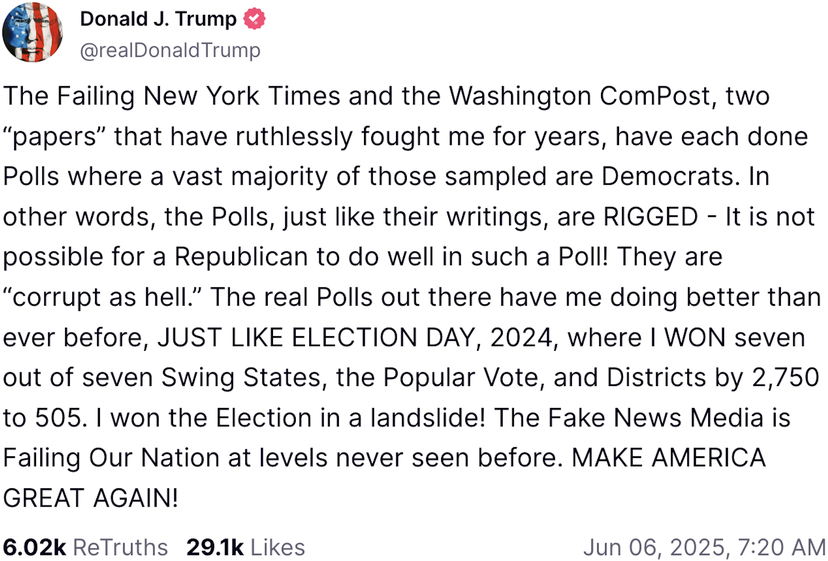
“Trump’s threats are setting up a potential crisis for American journalism,” said Reporters Without Borders. (Credit: Screenshot/Truth Social)
The international press-freedom group Reporters Without Borders this year ranked the United States only 57 of 180 countries and territories on its Press Freedom Index, explaining, “After a century of gradual expansion of press rights in the United States, the country is experiencing its first significant and prolonged decline in press freedom in modern history, and Donald Trump’s return to the presidency is greatly exacerbating the situation.
“While the media in the United States generally operate free from government interference, media ownership is highly concentrated, and many of the companies buying American media outlets appear to prioritize profits over public interest journalism. In a diverse global media landscape, local news has declined significantly in recent years. A growing interest in partisan media threatens objectivity, while public confidence in the media has fallen dangerously.
“President Donald Trump was elected to a second term after a campaign in which he denigrated the press on a daily basis and made explicit threats to weaponize the federal government against the media. His early moves in his second mandate to politicise the Federal Communications Commission (FCC), ban the Associated Press from the White House, or dismantle the US Agency for Global Media, for example, have jeopardized the country’s news outlets and indicate that he intends to follow through on his threats, setting up a potential crisis for American journalism.”
- Sarah Ellison and Jeremy Barr, Washington Post: How Trump’s media war brought Paramount to its knees
- Katherine Jacobsen, Committee to Protect Journalists: Alarm bells: Trump’s first 100 Days ramp up fear for the press, democracy (April 30)
- PEN America: Paramount’s Settlement With President Trump Is a “Spineless Capitulation” and a Blow to Press Freedom
- Raechal Shewfelt, Entertainment Weekly: Former CBS anchor Dan Rather calls Paramount’s $16 million deal with Trump ‘a sell-out to extortion’
- Society of Professional Journalists: Paramount settlement betrays journalists who put truth first
- Alex Weprin, Hollywood Reporter: CBS News’ John Dickerson Takes on Trump Settlement: “Can You Hold Power to Account After Paying It Millions?”
Gayle King reacts two months ago to celebrity friends who criticized her space flight. (Credit: YouTube)
Can Gayle King Be Both Celebrity and Journalist?
On Fox News, Gayle King and Oprah Winfrey were described as “celebrities” in Fox’s coverage of the lavish Venice wedding last weekend of Jeff Bezos and Lauren Sanchez. Winfrey has long since graduated from talk-show host to media mogul. But King is still in the journalistic role of “CBS Mornings” co-host, and Bezos is a possible interview subject.
Should King have been in Venice as a “celebrity”?
CBS woudn’t respond to an inquiry, just as it didn’t when questions were raised about King accepting a ride to space on Bezos’ Blue Origin in April, alongside Sánchez and Katy Perry.
Oliver Darcy wrote of that flight for his Status newsletter in March, “no one will say who’s paying. Space tourism isn’t cheap. Some passengers have spent millions, and even joining the Blue Origin waitlist costs $150,000.
“CBS News has strict policies against accepting ‘gifts and freebies,’ yet one of its top anchors is getting a coveted seat on a high-profile mission while the network showers Blue Origin with glowing coverage.
“Doesn’t that seem like a conflict of interest? If a CBS journalist took a free luxury vacation in exchange for publicity, it would be a clear ethics violation that would land them in hot water with management. A spaceflight is on a much bigger scale. Which begs the question: Who did King clear this with? And why did they say yes?”
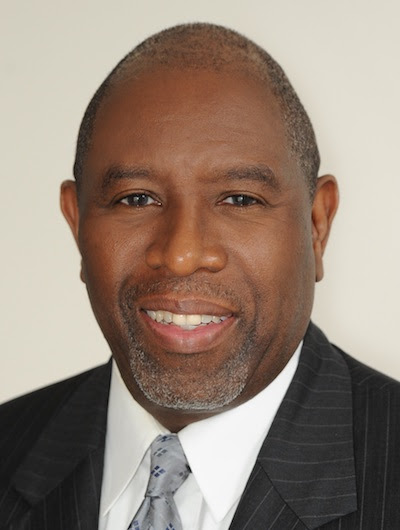 Asked for his perspective on the Venice trip, Rod Hicks (pictured), director of ethics and diversity at the Society for Professional Journalists, messaged Journal-isms:
“The SPJ Code of Ethics cautions journalists to avoid even the perception of conflicts of interest.
“Journalists have lives, and some have friends who are wealthy and may invite them to a party filled with millionaires, billionaires and celebrities. As journalists, they should give thoughtful consideration to whether accepting an invitation may raise ethical concerns, particularly if the party thrower is often engaged in newsworthy activities.
“Specifically, the Code offers this guidance on potential conflicts:
“Avoid conflicts of interest, real or perceived. Disclose unavoidable conflicts.
“Refuse gifts, favors, fees, free travel and special treatment, and avoid political and other outside activities that may compromise integrity or impartiality, or may damage credibility.”
- Erin Clack, People: Oprah Winfrey and Gayle King Arrive in Venice Ahead of Jeff Bezos and Lauren Sánchez’s Star-Studded Wedding
Tracee Wilkins of WRC-TV, known as NBC4 in Washington, reports on the plight of Black newspapers, interviewing Denise Rolark Barnes, publisher of the Washington Informer, and Benjamin Chavis, president and CEO of the National Newspaper Publishers Association. (Credit: YouTube)
- “The Sacramento Observer earned the night’s most prestigious recognition, the John B. Russwurm Award,” as the National Newspaper Publishers Association held its convention last week in Savannah, Ga., NNPA’s BlackPressUSA reported. The award is “presented to the newspaper with the highest cumulative score across all award categories. The Observer achieved an impressive 154 points and took home first-place honors in Education Reporting, Business Reporting, Original Photography, Youth and Children Coverage, and Facebook Campaigns.”
- . . . The convention did not take up NNPA President Ben Chavis’ recent statement that “We are planning to take a delegation of the Black Press to visit [Havana]’ to work out a strategic alliance between the Cuban press and the Black Press of America.” The Cuban press is state-controlled and the press there operate with a mission to serve the government. There is no First Amendment.
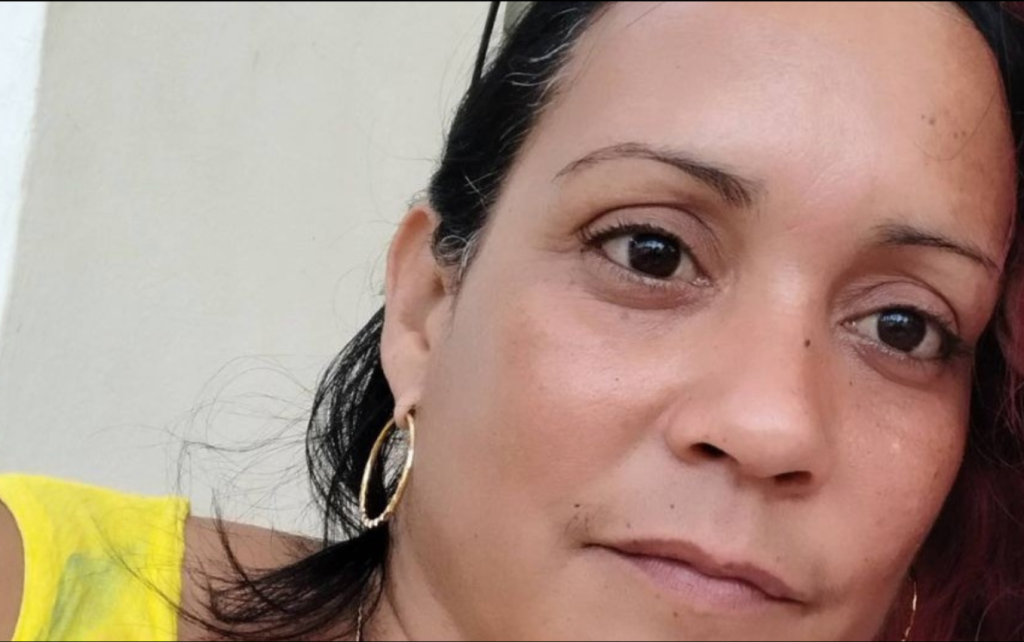 “The Cuban government must halt its harassment of journalists Yunia Figueredo (pictured) and Frank Correa, and allow them to continue their work with the community media outlet, Amanecer Habanero,” Katherine Jacobsen, U.S., Canada and Caribbean program coordinator for the Committee to Protect Journalists, said June 26. “Reporters should not be threatened into silence with legal orders . . . Cuba’s private media companies have come under increased scrutiny from a new communication law banning all unapproved, non-state media and prohibiting them from receiving international funding and foreign training. . . .”
 . . . “The Inter American Press Association said Monday it “condemns the detention of independent journalist Henry Constantín (pictured) in Cuba, who has been accused of alleged contempt for carrying out his journalistic work. The organization demands his immediate release, guarantees for his physical integrity, and an end to all forms of harassment, censorship, and repression against those who exercise the right to freely report and express opinions. “Constantín, director of the digital outlet La Hora de Cuba, was arrested on Sunday, June 29, in the city of Camagüey. According to his outlet, he remains detained at the State Security Operations Unit, known as Villa María Luisa, accused of contempt for a post published on May 15 on La Hora de Cuba’s Facebook page, where he denounced the actions of a State Security agent. However, according to the news site 14ymedio, there may be other reasons behind his detention. . . .”
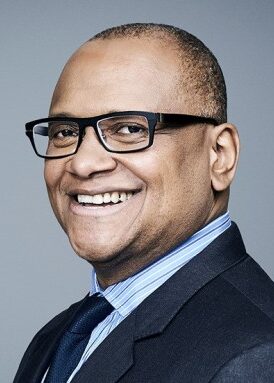 MSNBC has poached CNN executive Marcus Mabry (pictured) “to serve as its Senior Vice President of Content Strategy,” according to Max Tani of Semafor. According to a note to network employees, “Mabry is expected to help rethink how MSNBC’s audiences experience the network online. The network also said Mabry would develop new online projects for MSNBC, expanding the brand’s digital audience and business. That could eventually mean a suite of new digital revenue products, including e-commerce.” Tani wrote May 20. “Mabry was previously CNN Worldwide’s Senior Vice President of Digital Editorial and Programming, where he oversaw teams responsible for running the CNN.com homepage, as well as audio, features, and commerce initiatives.”
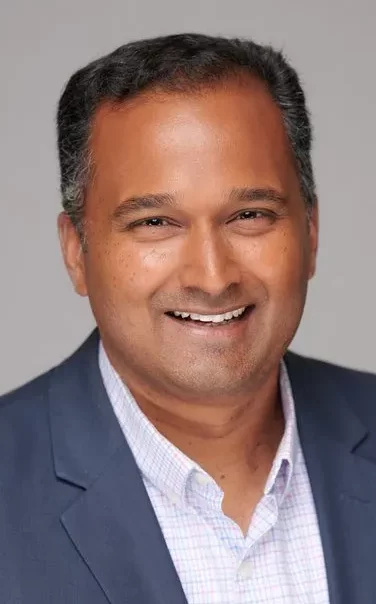 Sudeep Reddy (pictured) was enlisted away from Politico to join MSNBC “as it establishes its own presence in Washington, D.C. apart from NBC News and creates its own beltway bureau,” according to Erik Hayden, writing May 15 for the Hollywood Reporter. Reddy started June 16. At Politico, he “led 150 journalists as senior managing editor at the Arlington-based trade publication during an eight-year tenure.”
 Mumia Abui-Jamal (pictured), the former Black Panther and onetime president of the Philadelphia Association of Black Journalists, is the subject of an interview by Dave Zirin in Rolling Stone. Abu Jamal, convicted of murdering Philadelphia police officer Daniel Faulkner in 1981, and no longer on death row, says, “It’s hard not to look at the world at the present and feel a sense of profound chaos that grips one every day. It’s partly because what the country has chosen is a kind of politics of madness, of meanness and — forgive me for saying so, but I do believe this in my bones — a kind of mass ignorance that cannot be ignored. That’s the nature of this beast. It’s an extraordinary and terrifying moment.”
 Kimi Yoshino (pictured), editor-in-chief of the Baltimore Banner, is to start July 7 as a managing editor of The Washington Post “overseeing Features, Sports, Local, Investigations and Data. Yoshino’s hire rounds out [executive editor Matt] Murray’s leadership team, which includes Managing Editors Jason Anders, Liz Seymour, Peter Spiegel and Scott Vance. Anders, former deputy editor-in-chief for The Wall Street Journal, was announced earlier this month, and Spiegel, former U.S. managing editor for The Financial Times, was announced in January,” according to a May 22 Post announcement.
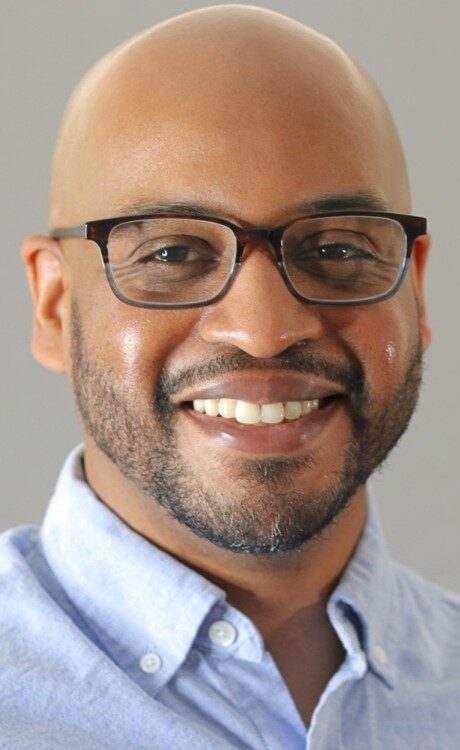 Zuri Berry, a multimedia journalist who has been digital producer for the Baltimore Banner after roles in radio and newspapers in Washington, Boston and Charlotte, N.C., has been named executive editor of a new Montgomery County, Md., edition of the Banner. “We plan to bring The Banner’s signature style of accountability reporting, feature writing and depth to our coverage of these issues,” Berry wrote to readers. Montgomery County, an affluent Washington suburb, is also the most populous in the state.
- “Former NPR Chief Communications Officer Isabel Lara has joined the Monterey Bay Aquarium,” Austin Fuller reported May 19 for Current. “Lara posted what she called a ‘big life update’ on Bluesky.”
 NPR’s Felix Contreras (pictured), “a trailblazing journalist and an international ambassador for Latin music and art,’ will receive the 2025 Hispanic Heritage Award for Journalism at the 38th Annual Hispanic Heritage Awards, the Hispanic Heritage Foundation announced June 26. The celebration takes place Sept. 4 at the Warner Theater in Washington.
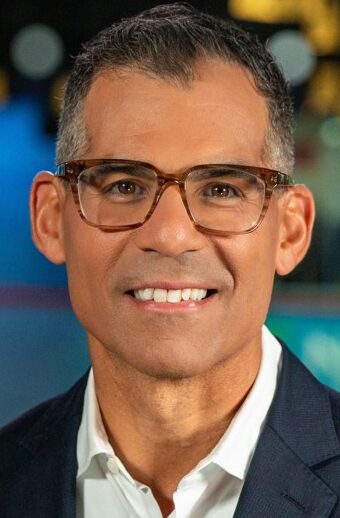 Chris Peña (pictured) is joining TEGNA Inc. as vice president of content for the Midwest region, effective June 30,” Veronica Villafañe wrote June 23 for her Media Moves site. “Peña was most recently director of broadcast transformation at consulting company Blue Engine. Before that, he spent seven years as senior vice president of news at Univision Local Media, exiting the company in 2023. He previously held roles as senior executive producer at MSNBC, executive editor of NBCLatino.com, assistant news director at NBC Chicago, executive producer at NBC Miami, and news director at KTMD Telemundo Houston.”
- The New York Times announced “Cannonball with Wesley Morris,” a new weekly culture podcast hosted by Morris, a Pulitzer Prize-winning critic. “Every week, Wesley will sit down with fellow writers, artists, critical thinkers and friends to talk about the cultural moment we’re in in order to better understand it, and ourselves,” the Times announced June 26.
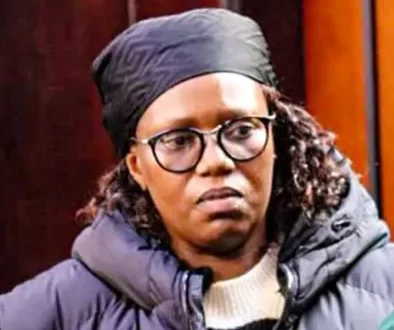 “The Committee to Protect Journalists called on Zimbabwean authorities Wednesday to release newspaper editor Faith Zaba (pictured), who was arrested on July 1. “She is facing charges of ‘undermining or insulting the authority of the president’ in connection with a satirical column,” CPJ said.
[btnsx id=”5768″]
To subscribe at no cost, please send an email to journal-isms+subscribe@groups.io and say who you are.
Facebook users: “Like” “Richard Prince’s Journal-isms” on Facebook.
Follow Richard Prince on Twitter @princeeditor
Richard Prince’s Journal-isms originates from Washington. It began in print before most of us knew what the internet was, and it would like to be referred to as a “column.” Any views expressed in the column are those of the person or organization quoted and not those of any other entity. Send tips, comments and concerns to Richard Prince at journal-isms+owner@
View previous columns (after Feb. 13, 2016).
View previous columns (before Feb. 13, 2016)
- “Black Journalists Will Figure in Jimmy Carter’s Legacy” on Sirius XM’s “Urban View Mornings.” (video) (Jan. 3, 2025)
- Diversity’s Greatest Hits, 2018 (Jan. 4, 2019)
- Book Notes: Is Taking a Knee Really All That? (Dec. 20, 2018)
- Book Notes: Challenging ’45’ and Proudly Telling the Story (Dec. 18, 2018)
- Book Notes: Get Down With the Legends! (Dec. 11, 2018)
- Journalist Richard Prince w/Joe Madison (Sirius XM, April 18, 2018) (podcast)
- Richard Prince (journalist) (Wikipedia entry)
- February 2018 Podcast: Richard “Dick” Prince on the need for newsroom diversity (Gabriel Greschler, Student Press Law Center, Feb. 26, 2018)
- Diversity’s Greatest Hits, 2017 — Where Will They Take Us in the Year Ahead?
- An advocate for diversity in the media is still pressing for representation, (Courtland Milloy, Washington Post, Nov. 28, 2017)
- Morgan Global Journalism Review: Journal-isms Journeys On (Aug. 31, 2017)
- Journal-isms’ Richard Prince Wants Your Ideas (FishbowlDC, Feb. 26, 2016)
Richard Prince with Charlayne Hunter-Gault, “PBS NewsHour,” “What stagnant diversity means for America’s newsrooms” (Dec. 15, 2015)
- Book Notes: Journalists Follow Their Passions
- Book Notes: Journalists Who Rocked Their World
